
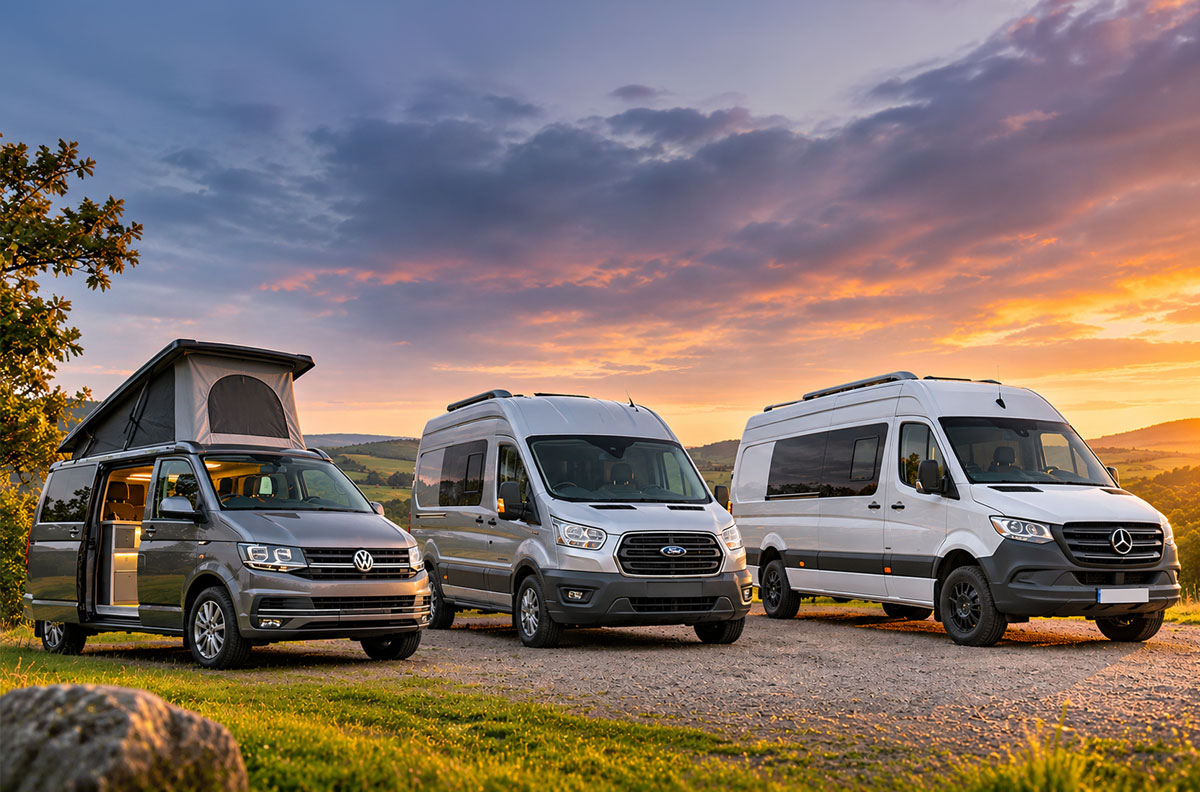
Choosing the right van for your campervan conversion is exciting, but with so many makes, models, sizes and specifications available, where do you start?
You might already have your heart set on a VW Transporter, love the idea of a rugged Mercedes Sprinter adventure van, or be dreaming of a spacious camper with a proper bathroom, fixed bed and room for the dog. The possibilities are endless, but not every van is suited to every lifestyle.
The best van for a campervan conversion isn't necessarily the biggest, most expensive or most popular. It's the one that works for you.
At Mark1 Conversions, we've been creating bespoke campervans since 2009, working with everything from versatile everyday vans to large, fully equipped touring vehicles. We've seen how choosing the right base vehicle can make all the difference to the finished conversion.
So, before you start browsing vans for sale, let's look at what really matters.
First things first: What will you use your campervan for?
It's tempting to start with a particular make or model, but we'd recommend thinking about your adventures before choosing the vehicle.
After all, there's a big difference between a van designed for spontaneous weekends in Cornwall and one built for spending several months exploring Europe.
Ask yourself a few questions:
- Weekend escapes or extended adventures?
Short trips might only require a comfortable bed, compact kitchen and some clever storage. Longer journeys often call for more living space, larger water tanks and additional facilities. - How many people are coming along?
Travelling solo or as a couple is very different from taking children, friends or pets. Think about both travelling seats and sleeping arrangements. - Will it be your everyday vehicle?
If you're commuting, doing the weekly shop and navigating town centres, a smaller van could make life considerably easier. - Do you want to stand up inside?
It might sound like a small detail, but being able to stand comfortably while cooking, changing or getting ready for bed can transform the experience. - What can't you live without?
A fixed bed? Hot shower? Full kitchen? Space for mountain bikes? The more features you want, the more carefully you'll need to consider the vehicle's dimensions.
There's no right or wrong answer. Some people are perfectly happy with a compact camper and a simple setup. Others want all the comforts of home, wherever they happen to park.
The trick is knowing which type of traveller you are.
Small-to-medium, large or XL: Which size van is best?
Van size is one of the biggest factors influencing your conversion. It affects everything from your sleeping arrangements and storage to where you can park and how comfortable the vehicle feels on longer trips.
We generally think about campervan conversions in three broad categories.

Small-to-medium vans: Big adventures in a practical package
Popular choices: VW Transporter, Ford Transit Custom, Renault Trafic and Vauxhall Vivaro.
If you want a campervan that's just as useful on a Monday morning as it is on a Friday evening, a small-to-medium van could be ideal.
These vehicles strike a balance between everyday practicality and campervan comfort. They're generally easier to drive, park and manoeuvre than larger panel vans, making them particularly appealing to customers who don't want a separate vehicle for daily use.
Despite their relatively compact dimensions, a well-designed conversion can include a comfortable sleeping area, kitchen facilities, fridge, storage and additional travel seating.
Adding a pop top roof can make a huge difference, providing standing room when parked and, with a suitable roof bed, additional sleeping accommodation.
The main compromise is space. Every cupboard, seat and appliance needs to earn its place, and you may need to choose between certain features.
For example, a large bathroom and permanently fixed double bed are much harder to accommodate in a medium-sized campervan without sacrificing much of the remaining living area.
Best suited to: Couples, small families, weekend adventurers and anyone wanting a campervan that's practical for everyday driving.

Large vans: More room to make it your own
Popular choices: Ford Transit, Mercedes Sprinter, VW Crafter and MAN TGE in suitable body lengths.
Moving up to a large van opens up a whole new world of conversion possibilities.
With greater interior length and height, there's more freedom to create separate living, cooking and sleeping areas. Depending on the vehicle and layout, you could have a fixed bed, larger kitchen, substantial storage and even a compact bathroom.
One of the biggest advantages is that you don't necessarily need to pack everything away each morning. A fixed bed can remain ready for use, while the kitchen and seating area stay accessible throughout the day.
Larger vans also provide more flexibility for off-grid systems, including leisure batteries, water storage and equipment for extended trips.
Of course, extra space comes with a few considerations. Larger vehicles can be more challenging to park, may be subject to height restrictions and aren't always ideal for narrow lanes or busy town centres.
Best suited to: Couples planning longer adventures, travellers wanting more home comforts and anyone looking for a dedicated touring campervan.

XL vans: Your home away from home
Popular choices: Long-wheelbase and extended-length versions of the Mercedes Sprinter, VW Crafter, MAN TGE, Ford Transit and Citroën Relay.
If your idea of campervan life involves spending weeks or months on the road, an XL van gives you the space to create something special.
These longer vehicles offer greater flexibility when designing a bespoke interior. Think generous fixed beds, spacious kitchens, dedicated bathrooms, comfortable seating and substantial storage for everything from outdoor furniture to bikes and adventure equipment.
They can also be excellent platforms for more comprehensive off-grid systems, allowing you to plan battery storage, solar charging, water capacity and heating around longer periods away from campsites.
But bigger isn't automatically better.
An XL campervan requires more consideration when it comes to parking, turning space, weight and accessibility. You'll also need to think about the overall vehicle length when planning ferry crossings, campsites and routes.
For customers who value interior comfort and space above compact dimensions, however, the possibilities are impressive.
Best suited to: Extended European touring, long-term travel, adventure-focused conversions and customers wanting a spacious, fully equipped campervan.
Which van should you choose? Our guide to popular models
Once you've decided roughly how much space you need, it's time to look at individual vehicles.
Different manufacturers offer different body shapes, dimensions and specifications, and these can influence what we can achieve with your conversion.
Here are some of the popular options we work with at Mark1 Conversions.

Volkswagen Transporter: The versatile favourite
The VW Transporter has long been a popular choice for campervan conversions, and it's easy to understand why. Its manageable dimensions make it suitable for everyday use, while the interior offers enough room for a thoughtfully designed kitchen, seating, sleeping arrangements and storage.
Transporters are particularly well suited to conversions featuring a pop top roof, allowing you to enjoy standing room when parked without committing to a permanently high-roof vehicle. They're a great option if you want a campervan that feels equally at home on a campsite, in a supermarket car park or on the driveway.
Worth considering: Interior space is limited compared with larger vans, so choosing the right furniture layout and sleeping arrangements is essential.

Ford Transit Custom: Practical and adaptable
Ford Transit Custom: Practical and adaptable The Ford Transit Custom is another excellent option for customers wanting a versatile campervan that can double as an everyday vehicle. With a well-planned interior, it can accommodate the essentials for comfortable touring, including cooking facilities, storage, a convertible bed and additional seating.
Depending on the model and conversion specification, a pop top can provide valuable headroom and extra sleeping space. It's worth remembering that different generations of the Transit Custom have different dimensions and conversion requirements, so compatibility with particular equipment should always be checked.
Worth considering: Think carefully about how many people will travel and sleep in the van, as this will influence the seating and furniture arrangement.

Renault Trafic and Vauxhall Vivaro: Clever use of space
The Renault Trafic and suitable generations of the Vauxhall Vivaro are popular alternatives for compact campervan conversions. They offer practical dimensions for everyday driving while providing enough interior room for a comfortable, multifunctional layout.
A combination of convertible seating, compact kitchen facilities and carefully designed cabinetry can make excellent use of the available space. As with any medium-sized van, good planning is everything. Small changes to furniture dimensions or positioning can have a noticeable impact on how the interior feels.
Worth considering: Vehicle generations differ, particularly with the Vauxhall Vivaro, so conversion options need to be assessed for the exact model.
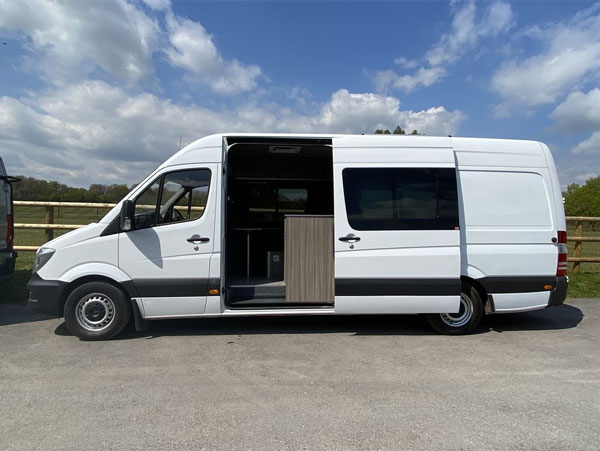
Mercedes Sprinter: Built for bigger adventures
The Mercedes Sprinter is a popular choice for larger campervan conversions, particularly among customers planning longer journeys or wanting a more adventurous setup. Available in different lengths and roof heights, it offers considerable flexibility when it comes to interior design.
Depending on the specification, there's potential for fixed beds, spacious kitchens, bathrooms, substantial storage and more advanced off-grid electrical systems. For customers who enjoy cycling, surfing or other outdoor pursuits, a raised rear bed can also create useful garage space underneath.
Worth considering: The Sprinter's interior width can influence bed orientation. Taller travellers may prefer a lengthways bed, while suitable side flares can provide additional sleeping width on certain layouts.
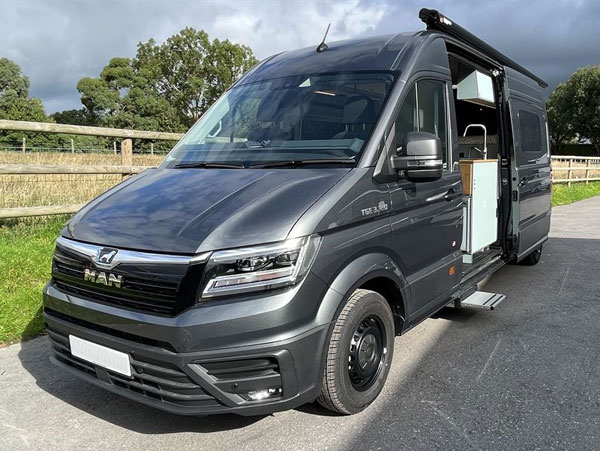
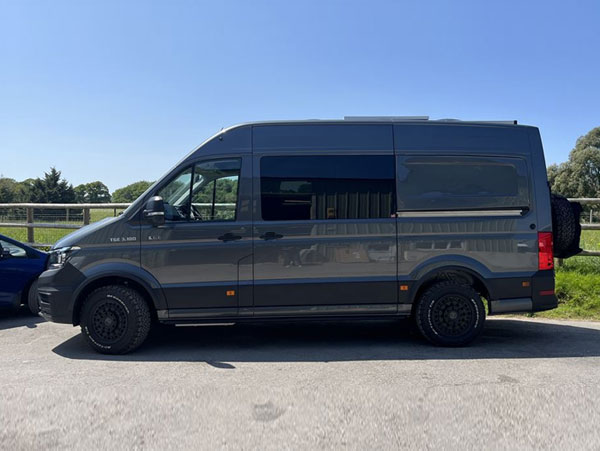
Volkswagen Crafter and MAN TGE: Space to get creative
The VW Crafter and closely related MAN TGE provide excellent foundations for larger bespoke campervan conversions. Their generous interior dimensions allow us to explore a wide variety of layouts, from comfortable touring vehicles to fully equipped adventure campers.
Fixed sleeping areas, dedicated bathrooms, larger kitchens and extensive storage are all possibilities, depending on the vehicle and available payload. These vans are particularly appealing if you want a conversion designed around specific hobbies, equipment or extended travel plans.
Worth considering: Different lengths, heights and driveline configurations can affect interior dimensions, floor height and layout possibilities.
Citroën Relay, Peugeot Boxer and Fiat Ducato: Room where it matters
These closely related large panel vans are popular campervan conversion platforms, partly because of their relatively wide, boxy interiors. That extra usable width can be particularly valuable when planning sleeping arrangements.
In suitable configurations, it's possible to position a double bed across the width of the vehicle, potentially freeing up more space for a kitchen, seating area or bathroom. Their practical body shape also lends itself to efficient cabinetry and storage.
Worth considering: Always check the actual interior dimensions and available payload of the particular vehicle. Bed orientation will depend on the sleeping length required and the finished wall construction.
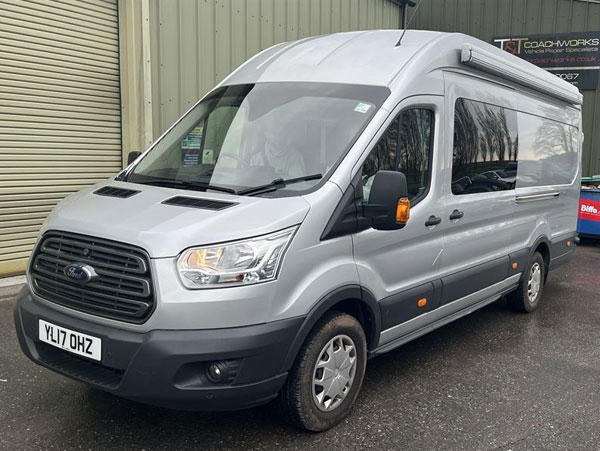
Ford Transit: A flexible large-van option
Not to be confused with the smaller Transit Custom, the full-size Ford Transit offers a range of body lengths and roof heights suitable for larger campervan conversions. It provides the space needed for more substantial living arrangements, including fixed beds, kitchens, storage and potentially bathroom facilities.
Its different configurations make it worth considering for customers wanting a spacious touring van without automatically choosing a Sprinter or Crafter.
Worth considering: The available interior dimensions vary significantly between Transit specifications, so it's important to choose the right version for your intended layout.
Don't forget about wheelbase and roof height
Choosing the make and model is only half the story. Two vans with the same badge on the front can offer very different conversion possibilities depending on their length and roof height.
Short or long wheelbase?
A shorter wheelbase generally makes a vehicle easier to manoeuvre and park, but limits the amount of interior space available. A longer wheelbase gives you more room for furniture, storage and separate living areas, although it may make tight parking spaces and narrow roads more challenging.
The best option depends on what you want inside the van and how you intend to use it.
Low roof or high roof?
If you're converting a medium-sized van, a low roof combined with a pop top can offer a practical balance between everyday driving and comfortable camping. For larger conversions, a high roof often provides enough standing room without needing an elevating roof.
That extra height can make a huge difference when cooking, changing clothes or spending a rainy afternoon inside.
However, it also affects access to height-restricted car parks, garages and certain routes.
Our advice? Don't choose a particular wheelbase or roof height until you've thought about your preferred interior layout. A little extra planning now can prevent some frustrating compromises later.

Five common mistakes when choosing a campervan
We've covered plenty of things to consider, but there are a few mistakes worth avoiding.
- Buying the van before planning the conversion
- Choosing a van purely because it's popular
- Underestimating how much space you'll need
- Forgetting about weight
- Spending the entire budget on the vehicle
Why speak to Lee at Mark1 conversions before buying?
Here's something we'd encourage anyone planning a campervan conversion to consider:
You don't need to have bought your van before speaking to us.
In fact, discussing your ideas before purchasing can be incredibly useful.
At Mark1 Conversions, we can help you understand which vehicles are likely to accommodate your preferred layout and what compromises might be involved. Perhaps you're considering a VW Transporter but would really like a fixed bed and separate shower. Or maybe you're looking at an XL Sprinter when a shorter vehicle could comfortably accommodate everything you need. Talking through your plans can help you narrow down the options before making a significant investment. Because we design and build bespoke conversions, we're not restricted to a handful of standard layouts.
We can explore different arrangements and tailor the design around your requirements and the space available. Our approach is simple: understand how you want to travel, then work towards a campervan that makes it possible.