
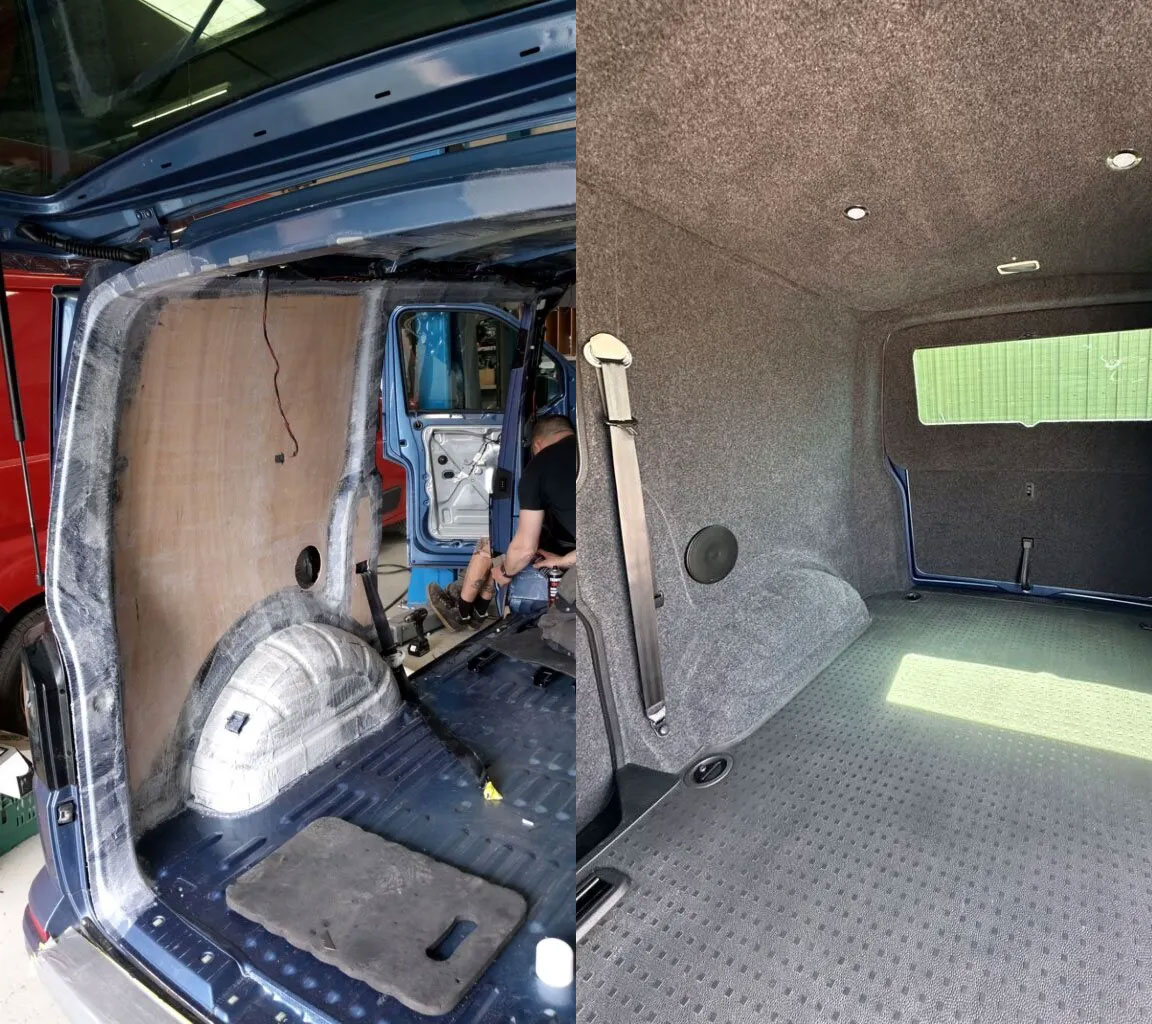
A practical guide to insulating your campervan properly
If you’re planning a campervan conversion, insulation is one of the most important steps — and one of the most misunderstood.
Done properly, it keeps your van warm in winter, cool in summer, and helps prevent condensation and damp. Done badly, it can lead to cold spots, moisture build-up, and long-term issues hidden behind your panels.
In this guide, we’ll break down what actually works when insulating a campervan, what to avoid, and how to get it right from the start.
Why insulation matters in a campervan
A van is essentially a metal box. Without insulation, it:
- Gets extremely cold in winter
- Heats up quickly in direct sun
- Suffers from heavy condensation
Good insulation helps to:
- Regulate temperature
- Reduce condensation
- Improve comfort year-round
- Make heating systems more efficient
- Create a quieter interior
It’s not just about comfort — it’s about protecting your conversion long-term.
The biggest mistake people make
The most common mistake is assuming:
"Any insulation is better than none"
That’s not always true.
Poorly installed insulation can:
- Trap moisture against the metal
- Create condensation pockets
- Lead to mould and rust over time
👉 Insulation only works if it’s installed correctly and used with the right materials.
What actually works in campervan insulation
There’s no single “perfect” material — it’s about using the right combination of materials in the right places.
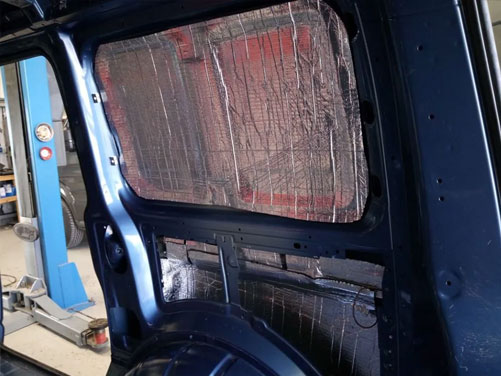
1. Closed-Cell Foam (Core Insulation Layer)
This is one of the most effective options for van conversions.
Why it works:
- Doesn’t absorb moisture
- Provides strong thermal insulation
- Helps reduce condensation risk
It’s commonly used on:
- Walls
- Ceiling panels
- Doors
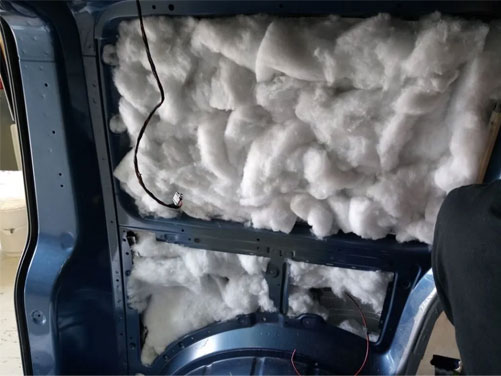
2. Recycled Bottle Insulation / Loft-Style Fill
Used to fill larger voids and cavities.
Benefits:
- Lightweight
- Good thermal performance
- Helps reduce noise
Best used alongside closed-cell foam rather than on its own.
3. Vapour Barrier (Often Overlooked)
This helps control moisture movement inside the van.
Why it matters:
- Prevents warm air reaching cold metal surfaces
- Reduces condensation forming behind panels
Not every build uses a full vapour barrier, but moisture control should always be considered.
4. Ply Lining & Carpeting (Finishing Layer)
This is what you actually see inside the van.
It:
- Adds a small amount of insulation
- Improves appearance
- Helps create a warmer feel
But it’s not a substitute for proper insulation behind it.
Cheap foam that absorbs noisture
Some low-grade foams:
- Hold water
- Break down over time
- Increase condensation issues
Overpacking cavities
Stuffing insulation into every gap can:
- Restrict airflow
- Trap moisture
- Cause long-term problems
The real challenge
Insulation alone won’t solve condensation.
Condensation happens when:
- Warm air meets cold metal
- Moisture has nowhere to escape
That’s why a good setup includes:
- Proper insulation
- Controlled airflow
- Roof ventilation (e.g. Maxxair fans or skylights)
👉 Insulation + ventilation is what actually works
Should you insulate the floor?
Yes, but differently.
Typical floor setup:
- Insulation board or foam layer
- Ply subfloor
- Durable flooring (e.g. Altro vinyl)
This helps:
- Reduce heat loss
- Improve comfort underfoot
How we approach insulation at Mark1 Conversions
At Mark1 Conversions, insulation isn’t treated as a quick step, it’s a critical part of the build.
We:
- Use moisture-resistant materials
- Combine insulation types for best performance
- Install everything carefully to avoid gaps and cold bridges
- Pair insulation with proper ventilation systems
The goal isn’t just warmth, it’s a van that performs well in real-world conditions, year-round.
Is Campervan Insulation Worth It?
Absolutely.
Without it, your van will:
- Be uncomfortable in most weather
- Suffer from condensation
- Be harder to heat
- Feel unfinished
With it, you get:
- A usable space in all seasons
- Better energy efficiency
- A more durable, long-lasting conversion
Thinking about converting a van into a camper?
If you want a van that’s properly insulated and built to last, we can help.